.jpg) Tom Bombadil breaks the barrow spell
by dumping the treasure out onto the grass to be claimed by any “kindly
creatures.” Interestingly, he was not opposed
to luxury and took “a brooch set with blue stones, many-shaded like
flax-flowers or the wings of blue butterflies.”
He planned to give it to Goldberry, but he noted that they would not
forget that woman who wore it, long ago.
Remembrance, in fact, is an important theme of the chapter, for the
wights themselves are like a memory of ancient wars and sorrows. Ultimately, though, the brooch is just “a
pretty toy." The true cure to the chill of the wights is to run naked on the
grass in the sunlight – to find in the organic and living world the greatest
and most authentic treasure, of which the elegant brooch is merely a reimagining
and a reflection.
Tom Bombadil breaks the barrow spell
by dumping the treasure out onto the grass to be claimed by any “kindly
creatures.” Interestingly, he was not opposed
to luxury and took “a brooch set with blue stones, many-shaded like
flax-flowers or the wings of blue butterflies.”
He planned to give it to Goldberry, but he noted that they would not
forget that woman who wore it, long ago.
Remembrance, in fact, is an important theme of the chapter, for the
wights themselves are like a memory of ancient wars and sorrows. Ultimately, though, the brooch is just “a
pretty toy." The true cure to the chill of the wights is to run naked on the
grass in the sunlight – to find in the organic and living world the greatest
and most authentic treasure, of which the elegant brooch is merely a reimagining
and a reflection.
Saturday, December 15, 2012
The Treasure of the Barrow-Downs
The barrow-wights in the chapter “Fog
on the Barrow-Downs” are distinguished by the coldness of their touch – and the
treasure that they haunt. When Frodo is
trapped in the tomb and sees his friends lying nearby, he notices that “About
them lay many treasures, of gold maybe, though in that light they looked cold
and unlovely. On their heads were
circlets, gold chains were about their waists, and on their fingers were many
rings.” It is a ceremonial, ritualistic
arrangement – but it is also an indication of the greed and empty desire that
characterize the wights. Yet the cold of
these beings ultimately afflicts our heroes: “Frodo was chilled to the marrow.” We should, indeed, beware the cold and greedy
hearts that haunt our world – for they not only put themselves on a path to
malice, but threaten to corrupt our collective hopes and aspirations.
.jpg) Tom Bombadil breaks the barrow spell
by dumping the treasure out onto the grass to be claimed by any “kindly
creatures.” Interestingly, he was not opposed
to luxury and took “a brooch set with blue stones, many-shaded like
flax-flowers or the wings of blue butterflies.”
He planned to give it to Goldberry, but he noted that they would not
forget that woman who wore it, long ago.
Remembrance, in fact, is an important theme of the chapter, for the
wights themselves are like a memory of ancient wars and sorrows. Ultimately, though, the brooch is just “a
pretty toy." The true cure to the chill of the wights is to run naked on the
grass in the sunlight – to find in the organic and living world the greatest
and most authentic treasure, of which the elegant brooch is merely a reimagining
and a reflection.
Tom Bombadil breaks the barrow spell
by dumping the treasure out onto the grass to be claimed by any “kindly
creatures.” Interestingly, he was not opposed
to luxury and took “a brooch set with blue stones, many-shaded like
flax-flowers or the wings of blue butterflies.”
He planned to give it to Goldberry, but he noted that they would not
forget that woman who wore it, long ago.
Remembrance, in fact, is an important theme of the chapter, for the
wights themselves are like a memory of ancient wars and sorrows. Ultimately, though, the brooch is just “a
pretty toy." The true cure to the chill of the wights is to run naked on the
grass in the sunlight – to find in the organic and living world the greatest
and most authentic treasure, of which the elegant brooch is merely a reimagining
and a reflection.
Tom Bombadil breaks the barrow spell
by dumping the treasure out onto the grass to be claimed by any “kindly
creatures.” Interestingly, he was not opposed
to luxury and took “a brooch set with blue stones, many-shaded like
flax-flowers or the wings of blue butterflies.”
He planned to give it to Goldberry, but he noted that they would not
forget that woman who wore it, long ago.
Remembrance, in fact, is an important theme of the chapter, for the
wights themselves are like a memory of ancient wars and sorrows. Ultimately, though, the brooch is just “a
pretty toy." The true cure to the chill of the wights is to run naked on the
grass in the sunlight – to find in the organic and living world the greatest
and most authentic treasure, of which the elegant brooch is merely a reimagining
and a reflection.
Friday, December 14, 2012
Goldberry and Tom
There are not that many female
characters in The Lord of the Rings,
and their roles are somewhat limited in scope.
Nevertheless, it is possible to provide a reading of these women, elves,
etc., that is more complex and even more feminist than one might expect. Consider, for example, the case of Goldberry,
a river spirit in the form of a woman, and her relationship with Tom Bombadil (who is
himself an ancient spirit rather than a normal man). At first glance it is easy to consider
Goldberry a stereotypical “lady of the house.”
She is doted on by Tom, to be sure, but is she merely an idealized,
subservient, and ultimately imprisoned wife?
Or is there something deeper and more dynamic in their relationship?
On the one hand, Goldberry describes Tom as “the Master of the house.” However, the hobbits call him "Master," too. And “In The House of Tom Bombadil,” as the chapter title puts it, one does not find a representation of a bourgeois abode. It seems to me that the house is not Tom’s property, but rather a magical extension of himself. After all, when Frodo asks Goldberry whether “all this strange land belongs to him,” the River-daughter replies, “No indeed!... That would indeed be a burden… The trees and the grasses and all things growing or living in the land belong each to themselves.” Tom’s “mastery” is a knowledge of songs and earth-magic, a connection with and a compassion for the life-force of the world. By extension, it seems unlikely that Tom would assert rights of “property” over his house – or, for that matter, over his "wife". The house is Tom – and in many ways, it is Goldberry, too. Goldberry reminds the hobbits, “Heed no nightly noises! For nothing passes door and window here save moonlight and starlight and wind off the hill-top.” Goldberry is not a prisoner of the house – she has chosen to live within the protection it offers, as she has chosen Tom. When she tells the hobbits to “Fear nothing!” it is presumably because of Tom’s magical powers, but one gets the sense that Goldberry, even on her own, would be a woman without fear.
And consider their interactions with one another: “Then Tom and Goldberry set the table; and the hobbits sat half in wonder and half in laughter: so fair was the grace of Goldberry and so merry and odd the caperings of Tom. Yet in some fashion they seemed to weave a single dance, neither hindering the other…”
Goldberry may sleep in the house, but she lives in the wider world, which is the authentic expression of her true nature. When the hobbits looked out a window on a rainy day, “there came falling gently as if it was flowing down the rain out of the sky, the clear voice of Goldberry singing up above them. They could hear few words, but it seemed plain to them that the song was a rain-song, as sweet as showers on dry hills, that told the tale of a river from the spring in the highlands to the Sea far below.” And when they say farewell to her, it is out in the hills: “There on the hill-brow she stood beckoning to them: her hair was flying loose, and as it caught the sun it shone and shimmered. A light like the glint of water on dewy grass flashed from under her feet as she danced.” Goldberry is as free as Julie Andrews in the opening of The Sound of Music.
Tolkien may not have been the world’s most radical feminist, but he created an ancient-seeming world where – unexpectedly, and perhaps anachronistically – certain kinds of feminism seem possible, natural, and vibrant. Goldberry isn’t subservient – she just loves Tom, as she loves the natural world that Tom so dramatically represents. In fact, I could not find a single reference in the chapter to Goldberry as Tom's "wife." She is strong and free and confident – and undaunted by a partner that happens to be one of the most powerful spirits in Middle-earth. Their relationship is an expression of a spontaneous, yet abiding, affection. It may be an idealization when set beside the realities of our world, but it is rather beautiful one all the same.
On the one hand, Goldberry describes Tom as “the Master of the house.” However, the hobbits call him "Master," too. And “In The House of Tom Bombadil,” as the chapter title puts it, one does not find a representation of a bourgeois abode. It seems to me that the house is not Tom’s property, but rather a magical extension of himself. After all, when Frodo asks Goldberry whether “all this strange land belongs to him,” the River-daughter replies, “No indeed!... That would indeed be a burden… The trees and the grasses and all things growing or living in the land belong each to themselves.” Tom’s “mastery” is a knowledge of songs and earth-magic, a connection with and a compassion for the life-force of the world. By extension, it seems unlikely that Tom would assert rights of “property” over his house – or, for that matter, over his "wife". The house is Tom – and in many ways, it is Goldberry, too. Goldberry reminds the hobbits, “Heed no nightly noises! For nothing passes door and window here save moonlight and starlight and wind off the hill-top.” Goldberry is not a prisoner of the house – she has chosen to live within the protection it offers, as she has chosen Tom. When she tells the hobbits to “Fear nothing!” it is presumably because of Tom’s magical powers, but one gets the sense that Goldberry, even on her own, would be a woman without fear.
And consider their interactions with one another: “Then Tom and Goldberry set the table; and the hobbits sat half in wonder and half in laughter: so fair was the grace of Goldberry and so merry and odd the caperings of Tom. Yet in some fashion they seemed to weave a single dance, neither hindering the other…”
Goldberry may sleep in the house, but she lives in the wider world, which is the authentic expression of her true nature. When the hobbits looked out a window on a rainy day, “there came falling gently as if it was flowing down the rain out of the sky, the clear voice of Goldberry singing up above them. They could hear few words, but it seemed plain to them that the song was a rain-song, as sweet as showers on dry hills, that told the tale of a river from the spring in the highlands to the Sea far below.” And when they say farewell to her, it is out in the hills: “There on the hill-brow she stood beckoning to them: her hair was flying loose, and as it caught the sun it shone and shimmered. A light like the glint of water on dewy grass flashed from under her feet as she danced.” Goldberry is as free as Julie Andrews in the opening of The Sound of Music.
Tolkien may not have been the world’s most radical feminist, but he created an ancient-seeming world where – unexpectedly, and perhaps anachronistically – certain kinds of feminism seem possible, natural, and vibrant. Goldberry isn’t subservient – she just loves Tom, as she loves the natural world that Tom so dramatically represents. In fact, I could not find a single reference in the chapter to Goldberry as Tom's "wife." She is strong and free and confident – and undaunted by a partner that happens to be one of the most powerful spirits in Middle-earth. Their relationship is an expression of a spontaneous, yet abiding, affection. It may be an idealization when set beside the realities of our world, but it is rather beautiful one all the same.
Thursday, December 13, 2012
Drowning in the Forest
.jpg) “The Old Forest” chapter
dramatically evokes the claustrophobia of a wild, enigmatic forest. Yet it does so in a very particular and
perhaps peculiar way. The chapter deftly
mixes fear and sensuality to describe a journey into a place that is dangerous,
but not always or necessarily evil. It
seems to me that the predominant imagery here is that of deepness and water. Being lost in the woods can be a frightening
experience – but the hobbits are not just lost, they are drowning in a world of organic magic, brooding bitterness, and ancient
power.
“The Old Forest” chapter
dramatically evokes the claustrophobia of a wild, enigmatic forest. Yet it does so in a very particular and
perhaps peculiar way. The chapter deftly
mixes fear and sensuality to describe a journey into a place that is dangerous,
but not always or necessarily evil. It
seems to me that the predominant imagery here is that of deepness and water. Being lost in the woods can be a frightening
experience – but the hobbits are not just lost, they are drowning in a world of organic magic, brooding bitterness, and ancient
power.We get an early clue that this will be a vertical as well as a horizontal journey when the hobbits enter the forest by means of a tunnel that was “dark and damp.” Merry described how, in his previous excursions into the woods, “branches swayed and groped without any wind.” One could imagine, in similar fashion, seaweed or the tentacles of octopi twisting in an ocean current. At one point the metaphor becomes precise, and the hobbits look out upon “a sea of trees.”
The watery imagery is pervasive, as with the “deep folds” in the ground that resembled “wide moats and sunken roads.” The trees themselves are described as getting not just “darker” but “deeper.” Those evocations become more obvious and literal as the hobbits reach the valley of the River Withywindle: “The ground grew soft, and in places boggy.” As the chapter proceeds, Frodo, in fact, almost drowns in the river, having fallen asleep on the bank. Sam finds that “a great tree-root seemed to be over him and holding him down, but he was not struggling.” So Frodo sleeps, dreams, and nearly drowns in the tree’s embrace. Merry’s dilemma brings the “undercurrent” of the chapter to its greatest fruition. He is, as many of you will remember, trapped inside a tree – swallowed Jonah-fashion by a willow-whale – almost drowning in the arboreal malleability of the forest.
Being lost can be like drowning – and being found can be a kind of rescue. Enter Tom Bombadil.
Wednesday, December 12, 2012
Hobbits and "Entanglement"
Over the course of browsing the
chapter “A Conspiracy Unmasked,” it occurred to me that there is something very
“tangled” about hobbits. And that’s not
a bad thing. One might start with their
curly hair, which is described in the prologue.
But hobbit names – particularly place names – have a crinkly sort of
quality, too. In this chapter we find
Brandy Hall, Bucklebury, the High Hay, Buck Hill, Crickhollow, and the Brandywine
Bridge. The deep interconnectedness of
hobbits manifests itself especially in their relationships. How can one think of Merry without Pippin, or
Frodo without Sam? Friendship is, of
course, a major theme of the chapter.
When Frodo bemoans how he cannot trust his friends – who have been
making secret plans to assist him – Merry chimes in, saying, “It all depends on
what you want… You can trust us to stick to you through thick and thin – to the
bitter end… But you cannot trust us to let you face trouble alone… We are
horribly afraid – but we are coming with you…”
Even the title of the chapter references the entanglement of a “conspiracy.”

So let’s take a cue from hobbits and
celebrate our entanglements.
Entanglement is a perfectly
wonderful word. In the world of quantum
mechanics, particles are sometimes said to be “entangled” – and have seemingly
magical properties. The potential erotic
qualities of “entanglement” are obvious in, for example, the art of Gustav
Klimt, where bodies twist and swirl and mosaics of color overwhelm the eye. A particularly famous example is “The Kiss”:
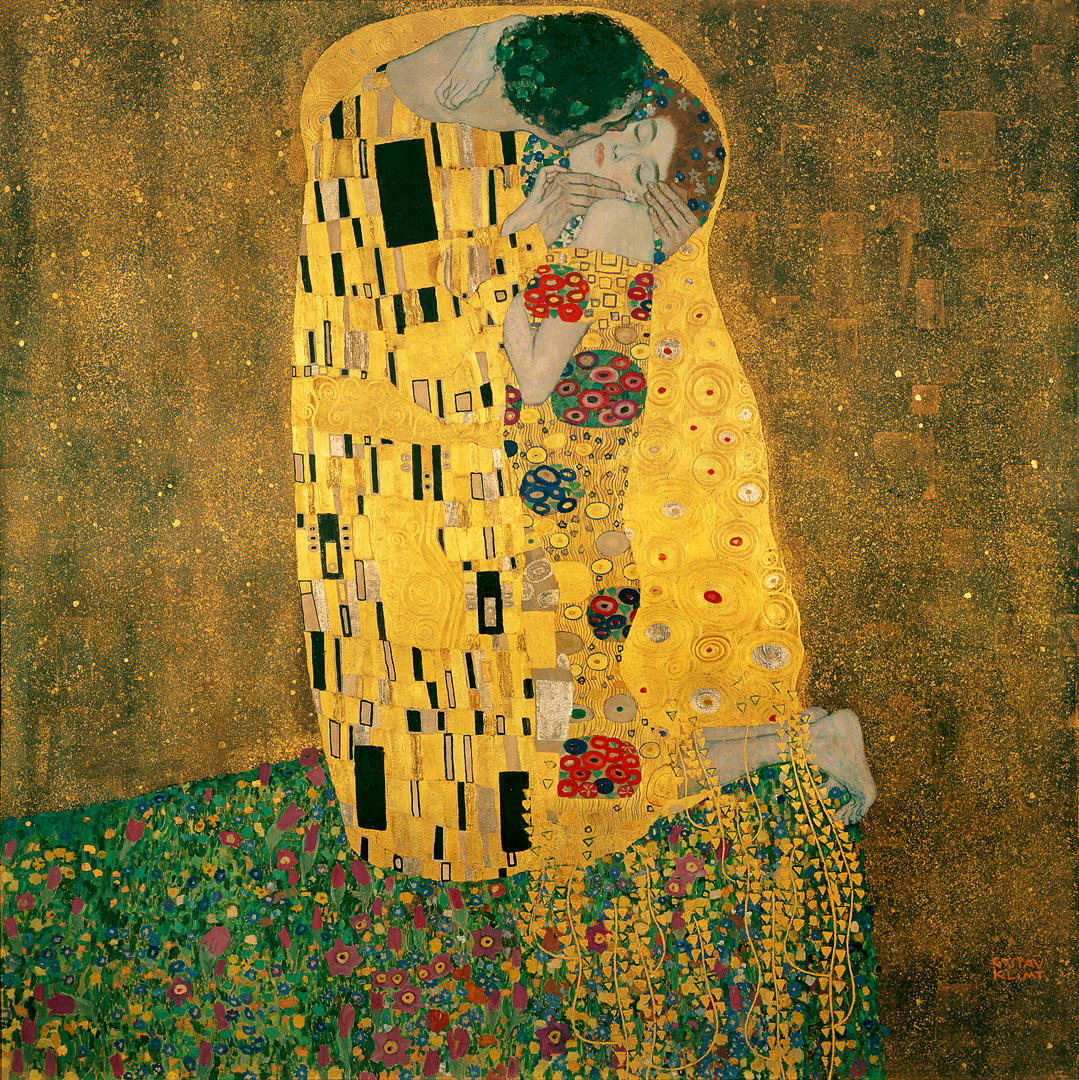

And the whole notion of society or
civilization depends upon a degree of social entanglement among individuals. All of this might seem counterintuitive when
applied to the “simple” hobbits. Yet it
is possible to consider entanglement as a manifestation of simplicity – a
complexity emerging from simple principles, evolved over time. After all, hobbits certainly have an interconnected society, as seen in the example of Brandy Hall, a collective
habitation described as having “about a hundred windows"! And Pippin’s bath-song, quoted in part below,
is ultimately a song of civilization:
O!
Sweet is the sound of falling rain,
and
the brook that leaps from hill to plain;
but
better than rain or rippling streams
is
Water Hot that smokes and steams.
O!
Water cold we may pour at need
down
a thirsty throat and be glad indeed;
but
better is Beer, if drink we lack,
and
Water Hot poured down the back.
Tuesday, December 11, 2012
Our Elves, Our Selves
There are many reasons to admire
Tolkien’s elves. They are beautiful,
graceful, and – in most cases – wise.
Yet the beauty of the elves, despite their mythological peculiarities, is
of a sort at least partially attainable by human beings, and one of its most insightful
descriptions is provided by Sam in the chapter “A Short Cut to Mushrooms.” The hobbit says, “They are quite different
from what I expected – so old and young, and so gay and sad, as it were.”
The beauty of the elves is not just
a physical beauty, but a way of being that taps into the diversity and tensions
of the human experience (for the elves were imagined by a human), and reconciles those
forces into a powerful and compelling unity.
People usually experience age and youth, or happiness and sadness, as
opposites in conflict with one another.
Yet in the elves, we see the connection of opposing elements, a balance
or intermingling of innocence and wisdom, of eager action and melancholy
contemplation. The power of those
tensions, the blending of those forces, is available to all of us.
Frodo is such a compelling hero in
part because he bridges the gap between the hobbits and the elves. Gildor names him “Elf-friend,” after all. As such, Frodo serves as a manifestation of
the twin desires of many Tolkien readers: to be as charming, amiable, and
earthy as a hobbit, yet as noble, graceful, and powerful as an elf. Even if we can’t always achieve such
aspirations in our own lives, at least we can be reminded of them through the
person of Frodo.
But we can be those things – sometimes, at least. It may be easier to act like a hobbit than an
elf – but there is something “elven” in our humanity, too.
Monday, December 10, 2012
Sundry Beasts
The Black Riders are, in many ways,
defined by their horses. Farmer Maggot,
for example, was threatened by the “great horse” that spurred in front of
him. It and its rider later moved “like
a bolt of thunder.” Yet, the Riders are,
in their own right, often defined by animal qualities. In this chapter, as previously, they are
described as “sniffing” – tracking the hobbits by scent, in a manner more
suitable of a hound than a human. Maggot
notes how one of the Riders “gave a sort of hiss.” Even more menacing, however, were the cries of
the Riders. Tolkien describes how “A
long-drawn wail came down the wind, like the cry of some evil and lonely
creature.” Pippin thinks it might have
been a bird, but Frodo insists, “It was not bird or beast…It was a call, or a
signal – there were words in that cry, though I could not catch them.” If Maggot’s dogs represent the mediators
between civilization and beastliness in a positive way, the Ring Wraiths are an
inversion of that process – human consciousness oddly reverted to animal
savagery, and yet neither quite one nor the other. When contemplating the supernatural qualities
of the Wraiths, it is easy to lose sight of how much their menace – at this
stage in the story, at least – depends upon their beast-like qualities.
Animals are vital to the chapter “A
Shortcut to Mushrooms” – in ways both subtle and obvious. The “clop” of ponies’ hoofs makes for a memorable
moment at the end of the chapter. Farmer
Maggot’s dogs, likewise, provide some of the dramatic tension in this segment
of the tale. Ultimately, though, these
are domesticated animals – allies of the hobbits. The tame savagery of the dogs is admirably
illustrated by the line: “The dogs lay by the fire and gnawed rinds and cracked
bones.” Tolkien would probably have
appreciated C.S. Lewis’ comment about affection for animals in The Four Loves. Lewis says a domesticated animal “has three
legs in nature’s world and one in ours.
It is a link, an ambassador… Man with dog closes a gap in the universe.” (Harcourt, 1960, p.52).
 |
| American Museum of Natural History |
Sunday, December 9, 2012
Silence and Speech in the Woods
One of the joys of reading Tolkien is that simple things -- like silence and speech -- seem fresh and profound. Consider these examples from the chapter "Three is Company." In a rare example of animal expression, Tolkien gives voice to a fox, who remarks upon his strange encounter with a group of hobbits. The words are simply thoughts, but the reader is aware of them -- and the "talking" animal reinforces the idea that the natural world is full of awareness, of sorts not customarily recognized by humans, or even hobbits. The eventual appearance of the elves reinforces this sensation -- in harmony with the environment, they make camp and feast in a place where "the green floor ran on into the wood, and formed a wide space like a hall, roofed by the boughs of trees."
For Tolkien, words seem to be more than the expression of an indvidual's will -- they are part of a deep legacy which emerges almost of its own accord. Thus, Frodo recites Bilbo's road poem, but says, "It came to me then, as if I was making it up; but I may have heard it long ago." The elves are also speaking, or singing, when they make their appearance. Even the hobbits that didn't understand "the fair elven-tongue" could experience something: "the sound blending with the melody seemed to shape itself in their thought into words which they only partly understood." The silence of the mind, the song in the forest, Elvish and non-Elvish, all mingle together as a cloud of grace and beauty. What's more, Frodo seems to identify them as High Elves because of a single word: "They spoke the name of Elbereth!"
Despite the song, the elves are often associated with silence. They were silent as the hobbits watched them pass, and again once the hobbits joined them. But this time the quiet of their movement is linked with other natural imagery: "They marched on again in silence, and passed like shadows and faint lights..." The elves are bound to the landscape. Born under starlight, when first they appeared in the world, they are the music in the shadows, the light in the darkness. One might think of Henry David Thoreau's description in Walden: "In the midst of a gentle rain... I was suddenly sensible of such sweet and beneficent society in Nature, in the very pattering of the drops, and in every sound and sight around my house, an infinite and unaccountable friendliness all at once like an atmosphere sustaining me." (http://xroads.virginia.edu/~hyper/walden/hdt05.html) The hobbits will have to contend with the anger of trees, eventually, but in chapter three nature and its elvish allies -- or incarnations? -- are on their side. And they need not fear the silence as long as they have the stars.
For Tolkien, words seem to be more than the expression of an indvidual's will -- they are part of a deep legacy which emerges almost of its own accord. Thus, Frodo recites Bilbo's road poem, but says, "It came to me then, as if I was making it up; but I may have heard it long ago." The elves are also speaking, or singing, when they make their appearance. Even the hobbits that didn't understand "the fair elven-tongue" could experience something: "the sound blending with the melody seemed to shape itself in their thought into words which they only partly understood." The silence of the mind, the song in the forest, Elvish and non-Elvish, all mingle together as a cloud of grace and beauty. What's more, Frodo seems to identify them as High Elves because of a single word: "They spoke the name of Elbereth!"
Despite the song, the elves are often associated with silence. They were silent as the hobbits watched them pass, and again once the hobbits joined them. But this time the quiet of their movement is linked with other natural imagery: "They marched on again in silence, and passed like shadows and faint lights..." The elves are bound to the landscape. Born under starlight, when first they appeared in the world, they are the music in the shadows, the light in the darkness. One might think of Henry David Thoreau's description in Walden: "In the midst of a gentle rain... I was suddenly sensible of such sweet and beneficent society in Nature, in the very pattering of the drops, and in every sound and sight around my house, an infinite and unaccountable friendliness all at once like an atmosphere sustaining me." (http://xroads.virginia.edu/~hyper/walden/hdt05.html) The hobbits will have to contend with the anger of trees, eventually, but in chapter three nature and its elvish allies -- or incarnations? -- are on their side. And they need not fear the silence as long as they have the stars.
Subscribe to:
Posts (Atom)